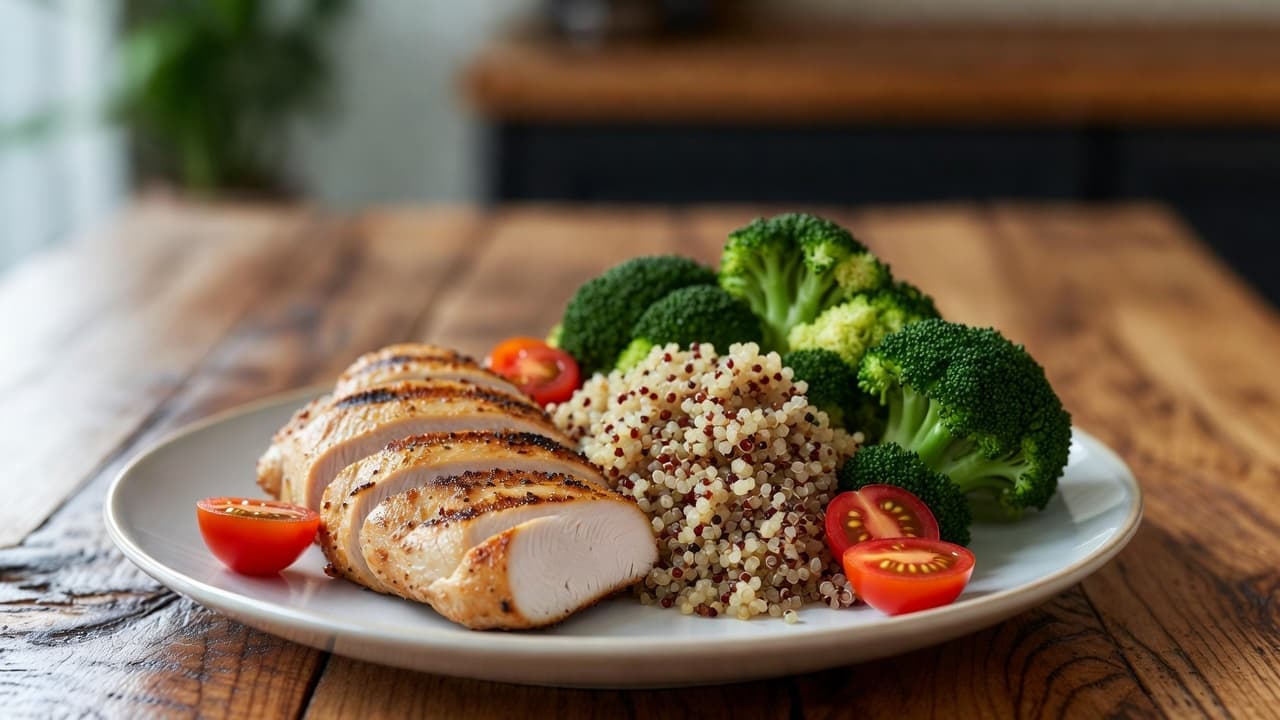
Nutrition Basics: What to Eat for Muscle Gain
You can't out-train a bad diet. If building muscle is your goal, what you eat matters just as much as how you train.
The Calorie Equation
To build muscle, you generally need to be in a caloric surplus—eating more calories than you burn. But the size of that surplus matters:
- Too small: Muscle growth is slower than it could be
- Too large: You'll gain unnecessary fat
- Sweet spot: 200-500 calories above maintenance
Finding Your Maintenance Calories
A rough estimate: bodyweight in lbs x 14-16 (or kg x 30-35) = daily maintenance calories
For more precision, track your food and weight for 2-3 weeks, then adjust based on results.
Protein: The Building Block
Protein provides the amino acids your muscles need to repair and grow.
How Much?
Research consistently shows: 0.7-1 gram per pound (1.5-2.2g per kg) of body weight is optimal for muscle building.
Best Sources:
- Chicken breast
- Lean beef
- Fish and seafood
- Eggs
- Greek yogurt
- Cottage cheese
- Legumes (for plant-based options)
- Tofu and tempeh
Distribution Matters
Spread protein intake across meals. Aim for 25-40g per meal to maximize muscle protein synthesis.
Carbohydrates: Your Fuel
Carbs are not the enemy. They're the primary fuel for intense training.
Benefits of Adequate Carbs:
- Better workout performance
- Faster recovery
- Muscle glycogen replenishment
- Protein sparing (your body uses carbs for energy instead of breaking down muscle)
Good Sources:
- Rice
- Potatoes
- Oats
- Whole grain bread
- Fruits
- Vegetables
Fats: Essential but Moderate
Fats support hormone production (including testosterone) and overall health.
Target: 0.3-0.5g per pound (0.7-1.1g per kg) of body weight
Quality Sources:
- Olive oil
- Avocados
- Nuts and seeds
- Fatty fish
- Eggs
Meal Timing
While total daily intake matters most, timing can provide small advantages:
Pre-Workout (1-2 hours before):
A balanced meal with protein and carbs ensures you have energy and amino acids available.
Post-Workout:
Eating protein after training can maximize muscle protein synthesis. Aim to eat within 2-3 hours of training.
Before Bed:
A protein-rich snack (like casein or Greek yogurt) provides amino acids during the overnight fast.
Sample Meal Plan
Here's what a muscle-building day might look like for a 180lb (82kg) person:
Breakfast:
- 3 eggs scrambled
- 2 slices whole grain toast
- 1 banana
- ~500 calories, 30g protein
Lunch:
- 6oz chicken breast
- 1 cup rice
- Mixed vegetables
- ~600 calories, 45g protein
Pre-Workout Snack:
- Greek yogurt with berries
- ~200 calories, 20g protein
Post-Workout:
- Protein shake with banana
- ~300 calories, 30g protein
Dinner:
- 6oz salmon
- Sweet potato
- Broccoli
- ~600 calories, 40g protein
Evening Snack:
- Cottage cheese with nuts
- ~300 calories, 25g protein
Total: ~2,500 calories, 190g protein
Supplements: Worth It?
Most supplements are unnecessary. Focus on food first. However, a few can help:
- Protein powder: Convenient when whole food isn't practical
- Creatine monohydrate: Well-researched, improves strength and power
- Vitamin D: If you're deficient (common in northern climates)
Key Takeaways
- Eat in a moderate caloric surplus (200-500 calories)
- Prioritize protein (0.7-1g per pound / 1.5-2.2g per kg)
- Don't fear carbs—they fuel your training
- Eat quality fats for hormonal health
- Timing is less important than total daily intake
- Consistency over perfection
Combine smart nutrition with a well-designed training program from Amrap, and you'll be set for success.
Stop guessing. Start training.
Create custom workout routines, get exercise guidance, and receive real-time coaching whenever you need it.
Try Your AI Coach